
BPS: Assessing the biodiversity of real estate projects using an independent, evidence-based method
The Biodiversity Performance Score (BPS) is a independent evaluation of the biodiversity performance of a real estate or development project.
measurable, verifiable and reproducible indicators , and provides an objective reading of the level of performance actually achieved.
The BPS is a decision support tool , which can be used in the upstream phase as well as in the project phase, without replacing certification.

Evidence-based assessment to structure decisions
Environmental challenges call for measurable, comparable and verifiable data.
The BPS provides a standardized reading of biodiversity performance, useful for analyzing a site, comparing a project or documenting commitments.
The BPS provides a standardized reading of biodiversity performance, useful for analyzing a site, comparing a project or documenting commitments.
The indicators used are:
- measurable and traceable data;
- a clear and consistent rating system across the territory;
- a single analysis framework applicable to all projects;
- a common basis for project management assistance, project owners and project managers.
The BPS provides a standardized and documented reading of biodiversity performance, useful for comparing projects, analyzing gaps and preparing decisions.
In the BPS, the quality and functionality of environments constitute evaluation components, integrated into a global, weighted and traceable reading of the biodiversity performance of real estate projects.
A component of the BPS: the indicator of the quality and functionality of environments
The quality and functionality indicator of environments refers to a set of criteria aimed at qualifying the ecological capacity, the functioning of habitats and the conditions for welcoming living things in development projects.
Recent national work on the biodiversity of real estate projects has introduced what is commonly referred to as the "environmental quality and functionality indicator", aimed at qualifying the ecological capacity and functioning of habitats within development operations.
These dimensions are commonly referred to as "indicators of environmental quality and functionality".
The Biodiversity Performance Score (BPS) is based precisely on the structured assessment of these components: habitat quality, ecological functions, networks, living soils, plant heritage and wildlife carrying capacity.
Where public indicators address these dimensions thematically or declaratively, the BPS aggregates them in a unique methodological framework, based on verifiable criteria, standardized modes of proof and explicit weighting, in order to produce a consolidated reading of the biodiversity performance of a project.
The BPS thus constitutes an operational translation of the principles conveyed by the quality and functionality indicators of environments, adapted to the concrete needs of project owners, developers and investors.
A demanding, operational and homogeneous framework
The BPS is based on methodological rules derived from international standards and validated by independent scientific bodies.
Its main strengths:
- a clear rating, based on verifiable indicators;
- a single grid applicable to all types of projects;
- a methodological structure facilitating the integration of biodiversity into the technical phases;
- an operational approach, without unnecessary complexity.
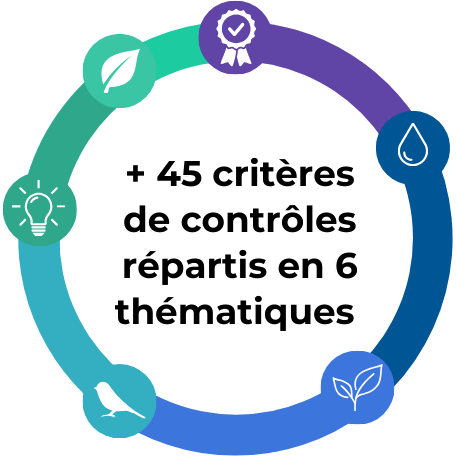
Measure to progress, compare, decide
The BPS helps stakeholders move beyond declarative approaches and to make commitments sustainable over time.
It allows, in particular, to:
It allows, in particular, to:
- to situate the environmental position of a project;
- to objectify the impacts between design and delivery;
- compare several options or scenarios;
- prepare for the increase in requirements towards a certification such as Effinature.
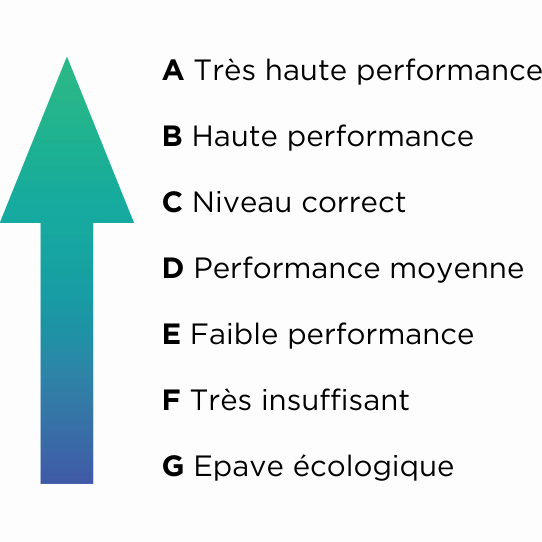
A technical base aligned with international standards
The BPS is based on the work of the Biodiversity Standards Council, an independent scientific body that oversees the consistency of the indicators. Key features:
- a structure based on international standards;
- immediate readability via a common score;
- the integration of ecological functions measured in the field;
- the compatibility of the analyses with international standards.
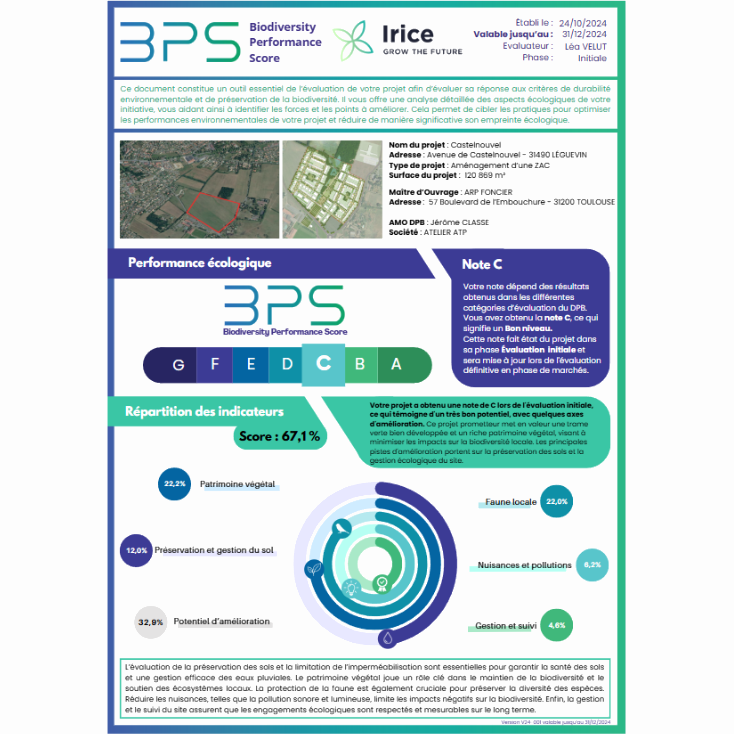
Comparable, traceable analysis usable by all stakeholders
The BPS methodology guarantees:
- the absence of arbitrary interpretation;
- the reproducibility of the results;
- an explicit, understandable and stable notation;
- a consistent process for all projects.
A unique tool for developers, property companies and private groups
The BPS facilitates:
- the preparation of institutional files;
- extra-financial communication;
- technical information on biodiversity in projects;
- the prioritization of actions and investments.

A common foundation with Effinature to prepare for certification
BPS and Effinature are based on compatible proof logics, but fall under the category of distinct statuses :
- the BPS is an independent assessment , producing a comparative reading of biodiversity performance;
- Effinature certifies compliance with a dedicated biodiversity standard , according to an independent and formalized process.
Positioning of the BPS in the decision-making process
The Biodiversity Performance Score (BPS) can be used in the processes of:
- project selection,
- capital allocation,
- asset valuation,
- as an indicator of observed or projected biodiversity performance.
Complementarity with Effinature certification
The BPS and Effinature certification serve distinct and complementary purposes:
- The BPS defines a level of biodiversity performance .
- Effinature certifies compliance with an accredited and enforceable biodiversity standard , assessed by an independent body.

Start your BPS assessment
IRICE assists you in the ecological analysis of your real estate projects.
FAQ
What is the difference between the environmental quality and functionality indicator and the BPS?
An indicator of environmental quality and functionality qualifies specific ecological components (habitats, connectivity, soils, and biological functions). The Biodiversity Performance Score (BPS) integrates these components into a comprehensive, structured, and weighted assessment based on verifiable criteria and standardized methods of verification. This allows for a shift from a purely ecological assessment to a consolidated view of a real estate project's biodiversity performance.
Does the BPS take into account the ecological quality and functionality of habitats?
Yes. The Biodiversity Performance Score (BPS) is based precisely on the assessment of the ecological quality of habitats, their functionality, ecological connectivity, living soils, and plant heritage. These dimensions, often addressed separately by thematic indicators, are grouped together in the BPS within a homogeneous methodological framework, allowing for comparable and traceable analysis of projects.
What tool can be used to structure biodiversity indicators for real estate decision-making?
Biodiversity indicators help to shed light on certain ecological dimensions of a project. The Biodiversity Performance Score (BPS) was designed to structure these indicators into a single operational assessment, usable during the design, arbitration, and decision-making phases, particularly for developers, landowners, and investors.
Why use the BPS in addition to public biodiversity indicators?
Public indicators aim to harmonize practices and define common ecological dimensions. The Biodiversity Performance Score (BPS) goes further by transforming these dimensions into a measurable, comparable, and evidence-based biodiversity performance, independent of the stabilization of regulatory frameworks.